


“Parents often tell us, ‘It’s like my little boy disappeared overnight.'”
If you’re the parent of a teenage boy, you’ve probably experienced that jarring moment when your beautiful little person seems to vanish. In his place is a lump of hairiness or grumps who communicates in grunts, spends hours behind noise-cancelling headphones, and treats the family home like a hotel where he is the only guest.
For many parents, this withdrawal is one of the most painful parts of adolescence. Feeling rejected, they naturally back away, hoping it’s “just a phase.”
The reality is more complex.
Developmental psychologists have consistently found that adolescence is a period where young people naturally shift their attention away from parents as they search for identity, belonging and independence (Steinberg, 2017; Blakemore, 2018). While this shift is entirely normal, it also creates one of the most important developmental windows in a young man’s life.
If parents step back without a plan, someone else steps in.
Increasingly, that “someone” is social media, online influencers or peers who are often just as confused about manhood as they are.
More Than Teen Attitude
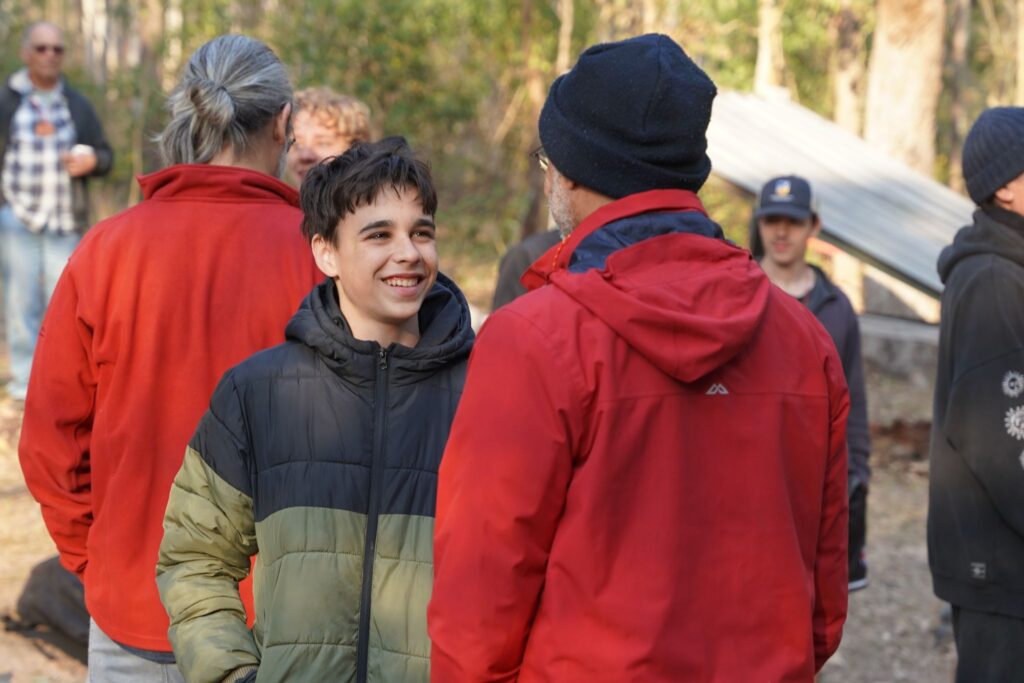
At Powerhouse Programs, we’ve spent more than fifteen years helping families navigate what we affectionately call “the messy middle.”
What we’ve discovered is that the core issue usually isn’t teenage attitude.
It’s the persistence of what we call Boy Psychology.
A boy naturally asks:
“What’s in it for me?”
He seeks acknowledgement.
He wants recognition.
He wants freedom without responsibility.
Power, from this perspective, exists primarily for his own benefit.
He feels almost immortal, struggles to appreciate consequences, and still unconsciously expects adults to organise life around him.
This isn’t because he’s “bad.”
It’s because growing into healthy manhood doesn’t happen automatically.
Psychologist Erik Erikson (1968) described adolescence as the critical stage for developing identity. During this period, young people begin discovering who they are by taking on increasing responsibility and meaningful roles within their family and community.
Without opportunities to develop these roles, many boys simply remain psychologically dependent while becoming physically older.
The Great Internal Shift
The journey into healthy manhood is not simply about becoming older.
It is about changing the question.
Instead of asking:
“What’s in it for me?”
a young man gradually begins asking:
“How can I help?”
This shift—from consumption to contribution—is one of the clearest indicators that genuine maturity is emerging.
Research by developmental psychologist William Damon (2008) demonstrates that young people who develop a sense of purpose beyond themselves experience greater wellbeing, motivation and resilience. They begin contributing because they understand they have something valuable to offer others.
That is the internal shift we’re trying to cultivate.
Practical Strategies to Encourage the Shift
Instead of asking:
1. Audit Your Language
“Did you do your chores?”
Try asking:
“What does the family need from you today?”
It’s a subtle difference.
The first asks for compliance.
The second invites contribution.
Over time, boys begin seeing themselves as valuable members of the family rather than consumers of family resources.
2. Encourage the Inner Quiet Voice
Modern boys are immersed in almost constant stimulation.
Phones.
Gaming.
Videos.
Music.
Notifications.
The developing brain rarely gets an opportunity to become still.
Creating technology-free times or spaces at home allows boys to reconnect with their own thoughts rather than constantly absorbing someone else’s opinions.
Psychiatrist Dr Daniel Siegel (2014) explains that reflection and mindful awareness during adolescence strengthen emotional regulation and help young people develop a clearer sense of identity.
Sometimes the greatest gift parents can give is simply a little silence.
3. Stop Nurturing the Boy
Perhaps the hardest strategy for parents.
If you’re still doing for him what he is capable of doing himself, you may unintentionally be slowing his development.
One of our sayings at Powerhouse Programs is:
“Redundancy is the goal.”
Healthy parenting gradually works itself out of a job.
As boys become young men, responsibility should steadily replace dependence.
Why Challenge Matters

Many parents want to protect their sons from hardship.
While understandable, resilience doesn’t develop through comfort.
It develops through appropriately challenging experiences experienced alongside trusted adults.
Researcher Michael Ungar (2011) describes resilience as growing through supportive relationships combined with manageable adversity—not by removing every obstacle from a young person’s life.
When boys are trusted with responsibility, challenged physically, emotionally and socially, they often discover strengths they never knew they possessed.
How Journey to Manhood Facilitates the Transformation
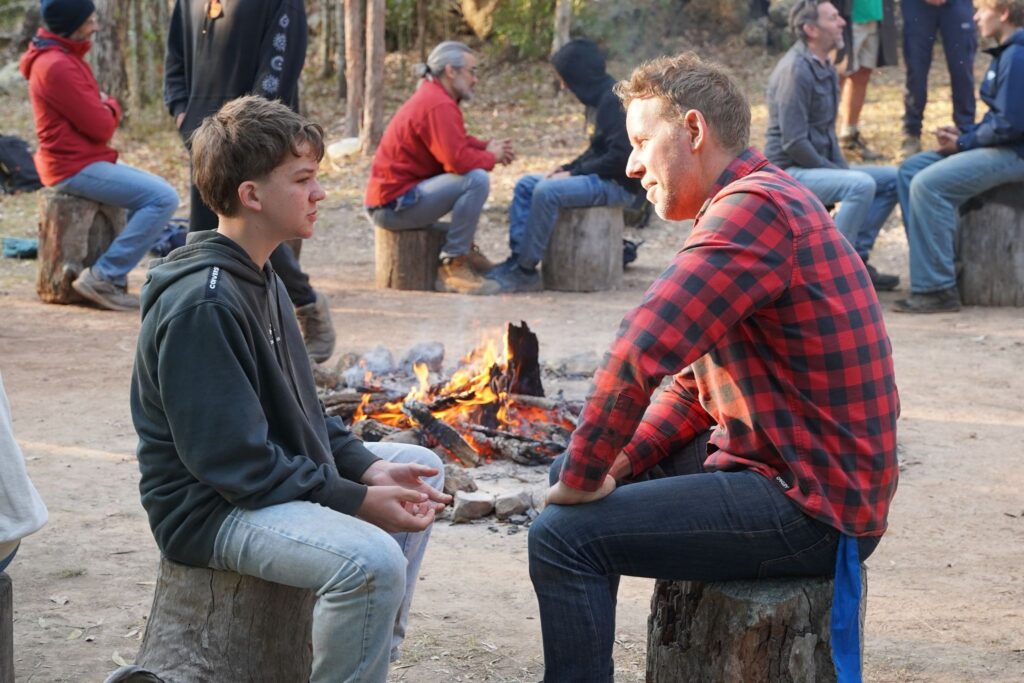
The Journey to Manhood (J2M) program intentionally draws a line in the sand.
For five days, boys leave behind many of the distractions of modern life and enter an environment where responsibility, service, resilience and accountability become the cultural norm.
Surrounded by men modelling the best versions of themselves, they experience what healthy masculinity actually looks like.
Not perfection.
Presence.
Men who own their mistakes.
Men who regulate their emotions.
Men who serve others.
Men who can be both strong and compassionate.
The transformation rarely happens in one dramatic moment.
Instead, it begins quietly.
Parents often notice:
- Better eye contact.
- Increased engagement.
- Greater ownership of mistakes.
- More initiative around home.
- Increased emotional honesty.
- A willingness to contribute without being asked.
Success isn’t measured by whether a boy returns home “fixed.”
Success is seeing the beginning of a different way of thinking.
Because manhood isn’t simply becoming independent.
It’s becoming someone others can rely on.
And that’s the journey every family deserves to experience.
References
Blakemore, S.-J. (2018). Inventing Ourselves: The Secret Life of the Teenage Brain. PublicAffairs.
Damon, W. (2008). The Path to Purpose: How Young People Find Their Calling in Life. Free Press.
Erikson, E. H. (1968). Identity: Youth and Crisis. W. W. Norton.
Siegel, D. J. (2014). Brainstorm: The Power and Purpose of the Teenage Brain. TarcherPerigee.
Steinberg, L. (2017). Adolescence (11th ed.). McGraw-Hill Education.
Ungar, M. (2011). The Social Ecology of Resilience: A Handbook of Theory and Practice. Springer.